Choosing the right fruit juice production line matters a lot. It affects product quality, daily output, and your profit. You may need a small-scale apple juice production line for local sales. Or you may want industrial apple juice processing equipment for large markets. Understanding the technology helps you decide.
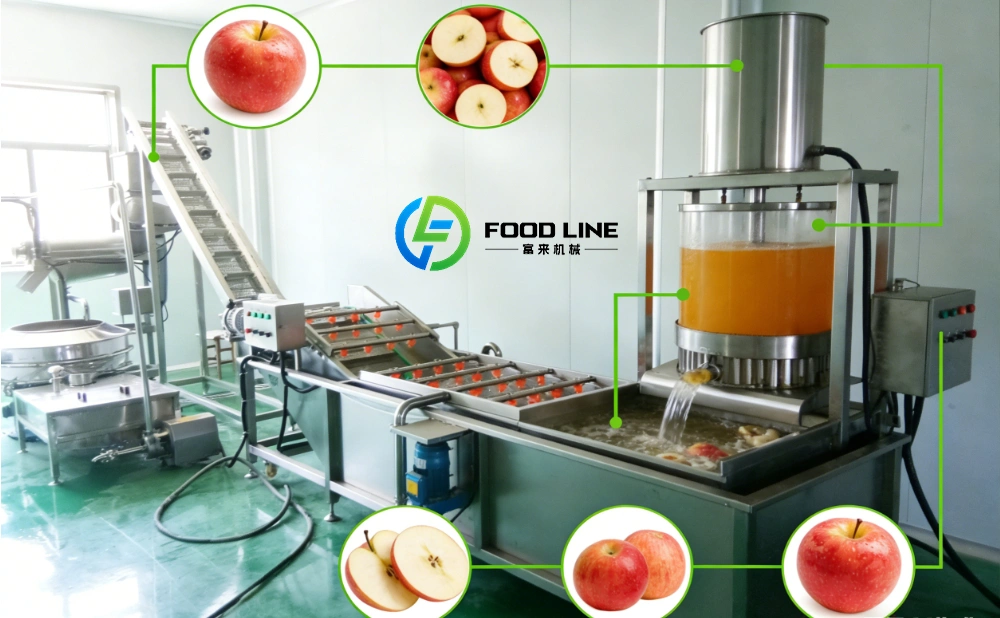
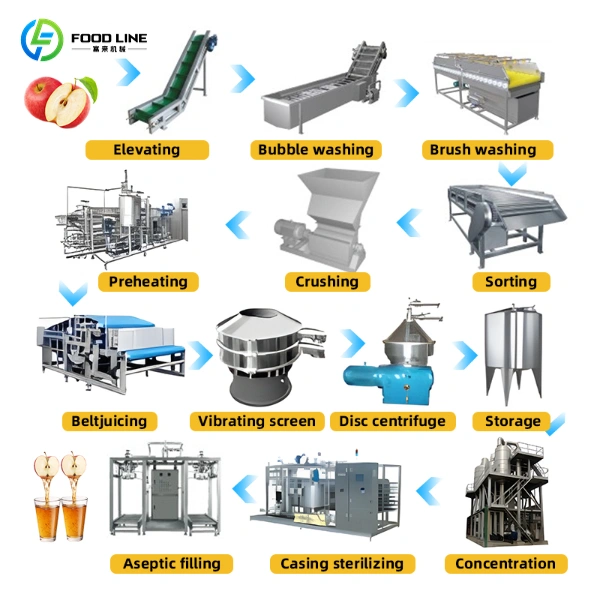
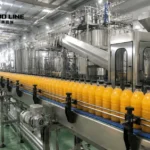
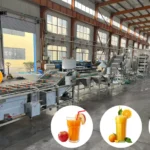
A complete fruit juice production line integrates washing, sorting, extraction, processing, sterilization, filling, and packaging into one continuous workflow. It supports many fruits, including oranges, mangoes, apples, grapes, pineapples, pomegranates, and berries. Modern lines use food-grade stainless steel, intelligent PLC control, and energy-saving design to meet international food safety standards like GMP and HACCP.
Pressing Methods of the Fruit Juice Processing Line
Press Type
Best Fruits
Yield
Automation
Juice Quality
Belt Press
Apples, pears, carrots
High
Fully auto
Good
Screw Press
Multi-fruit, grapes
Very high
Fully auto
Moderate
Hydraulic Press
Premium fruits, wine
Moderate
Semi-auto
Excellent
Cold Press
NFC juices, organic
Good
Auto
Excellent
Step-by-Step Fruit Juice Production Process
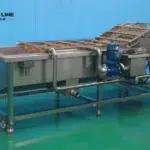
1. Fruit Pre–Processing
Raw material acceptance and grading
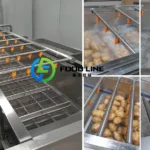
Thorough washing to remove dirt, dust, and pesticide residues
Peeling, destoning, and slicing (depending on fruit type)
Elevator feeding to the next stage
2. Juice Extraction & Pulping
Crushing and pulping to maximize juice yield
High-efficiency juicing with low bitterness
Separation of juice, peel, and seeds
3. Filtration & Blending
Coarse and fine filtration for clarity
Blending with purified water, sugar, or natural flavors
Adjusting Brix, acidity, and taste to the recipe
4. Homogenization & Degassing
Homogenization for smooth texture and stability
Degassing to prevent oxidation, browning, and flavor loss
5. Sterilization & Pasteurization
Pasteurization or UHT sterilization to kill bacteria
Extends shelf life while preserving nutrition and taste
Local standards: Meet food safety regulations in your market.
Budget & space: Match line size to your facility and investment.
Installation and support: The best apple juice making machine line needs a proper setup. Choose suppliers who offer: site check before delivery, installation and testing, training for your staff, spare parts stock, and remote help by phone or video.
Request a Solution for My Business
FAQs of Fruit Juice Processing Line
Q1: What is the difference between a fruit juice production line and an apple juice concentrate production line?
A fruit juice production line makes ready‑to‑drink juice. It presses, sterilizes, and packs. An apple juice concentrate production line has extra evaporators. It removes water to make a concentrate.
Q2: How much does a complete apple juice plant cost?
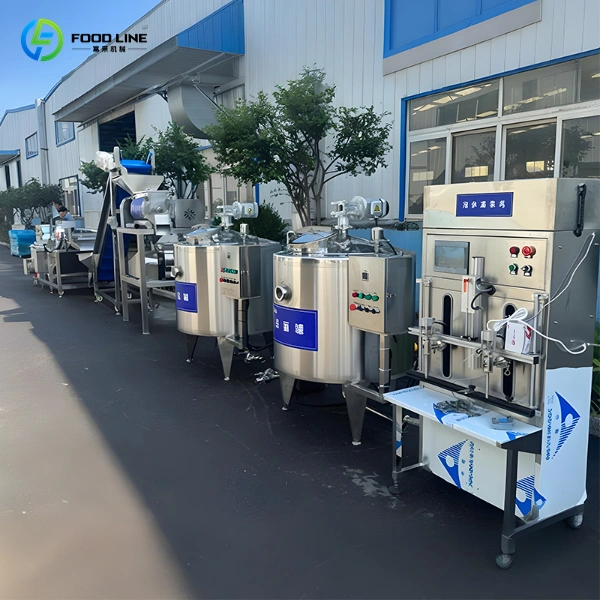
Costs vary. Our small-scale fruit production lines for craft juice start around USD 23,000.
Q3: Can I use the same line for apple juice and orange juice?
Yes, with the right parts. Oranges need special extractors to avoid bitter peel oil. A good fruit juice processing line can handle both with change parts.
Q4: What certifications should my equipment have?
Look for CE for Europe, FDA for the US, ISO 22000 for food safety, and HALAL or Kosher for specific markets. Your supplier should provide these.
Q5: How long does installation take?
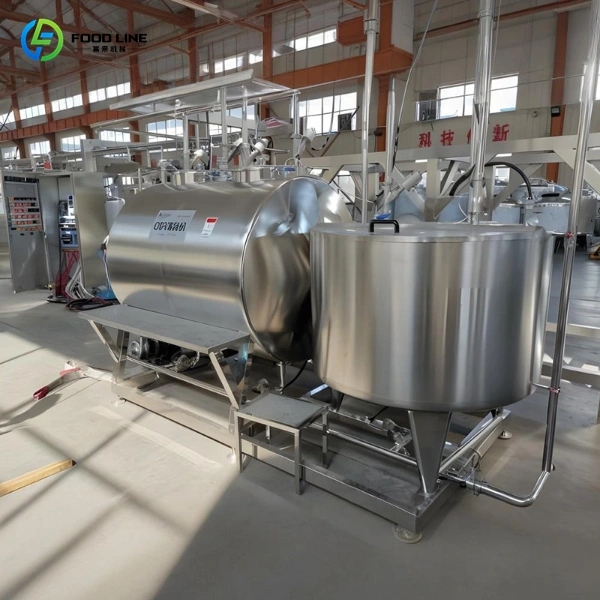
Small juice production lines are installed in 1-2 weeks. A complete juice plants take 3‑6 weeks for setup, testing, and training.
Conclusion
A fruit juice production line is a major investment. It impacts product quality and company profits. Understanding each step helps in making smart choices. From washing to packaging, every stage matters. Modern technology offers better efficiency and flexibility. Producers who follow market trends will stay ahead. The right production line turns fresh fruit into successful products.
Request a Solution for My Business
About Foodmax Machines
Foodmax Machines stands as a trusted fruit production line manufacturer with 20 years of industry experience. We have supplied complete apple juice plants to more than 20 countries across Southeast Asia, Europe, Africa, and South America. Our international certifications include CE, FDA, ISO 22000, and HALAL, so your equipment meets global standards automatically. We provide complete support from custom design to overseas installation and operator training. Our team provides customized food production line solutions, including fruit juice processing lines, pet food production lines, sauce production lines, oil processing lines, and more. Based on your production scale, raw materials, and market needs, we support you with comprehensive services from design and installation to after-sales maintenance.