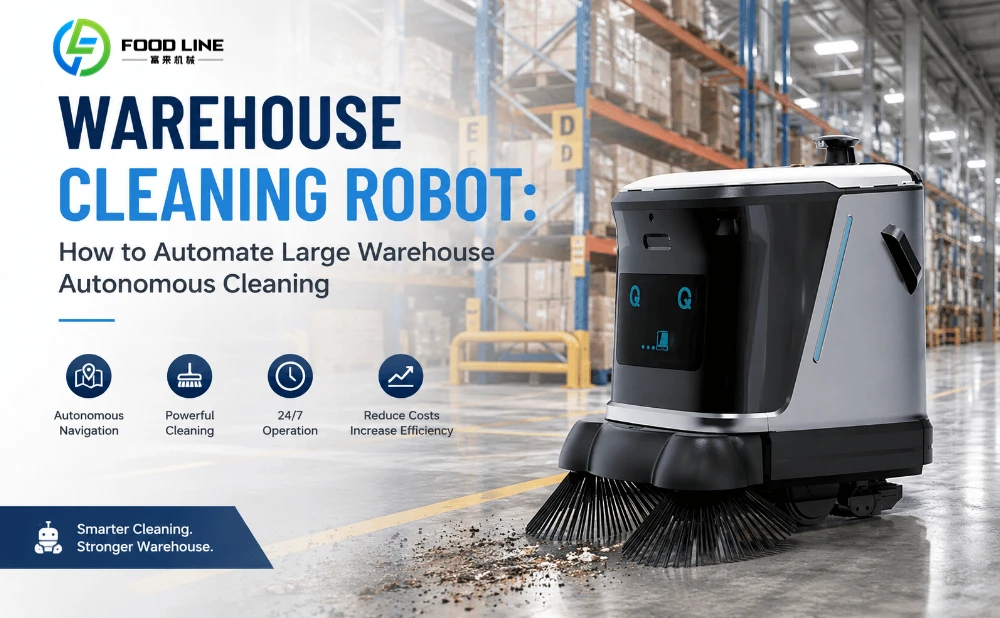
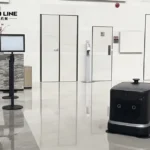
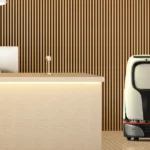
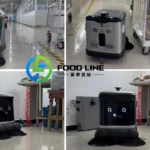
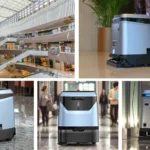
Keeping a large warehouse clean by hand is slow and costly. A warehouse cleaning robot can do the job faster, with less labor, and with better results. In this guide, we explain how these machines work, what they cost, and how to choose the right one for your facility.
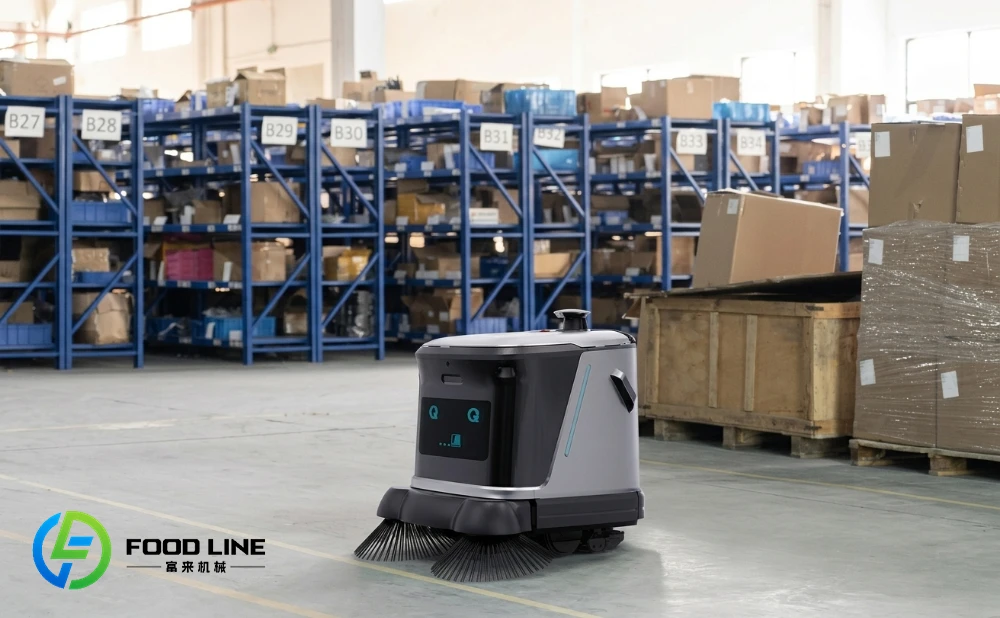
Large warehouses collect dust, pallet debris, tire marks, and liquid spills every day. Manual cleaning takes time and often depends on staff availability. An autonomous cleaning robot for warehouses can follow planned routes during working hours or overnight. Modern systems use LiDAR, cameras, and other sensors to detect people, pallets, forklifts, and temporary obstacles. They can also create maps and change routes when aisles become blocked. Automation offers several practical benefits:
More consistent cleaning results.
Lower dependence on manual labor.
Better dust and debris control.
Reduced slip risks from wet floors.
Digital cleaning records and remote monitoring.
More efficient use of cleaning water and detergent.
Request a Solution for My Business
How a Warehouse Cleaning Robot Works
Map the facility: The robot scans aisles, loading docks, staging areas, and other cleaning zones.
Plan cleaning routes: Operators set cleaning areas, schedules, and traffic rules.
Clean the floor: The robot sweeps debris or scrubs the surface with water and detergent.
Avoid obstacles: Sensors identify workers, pallets, racks, and moving equipment.
Dry the floor: A vacuum and squeegee system collects wastewater after scrubbing.
Return to the dock: The robot recharges and may refill clean water or discharge wastewater automatically.
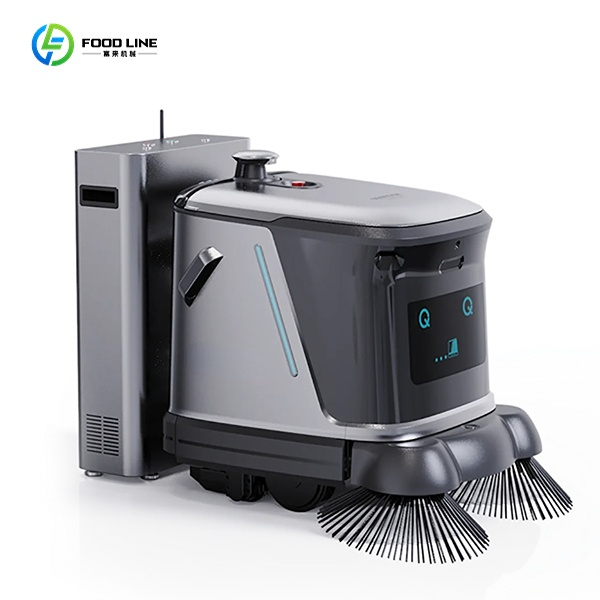
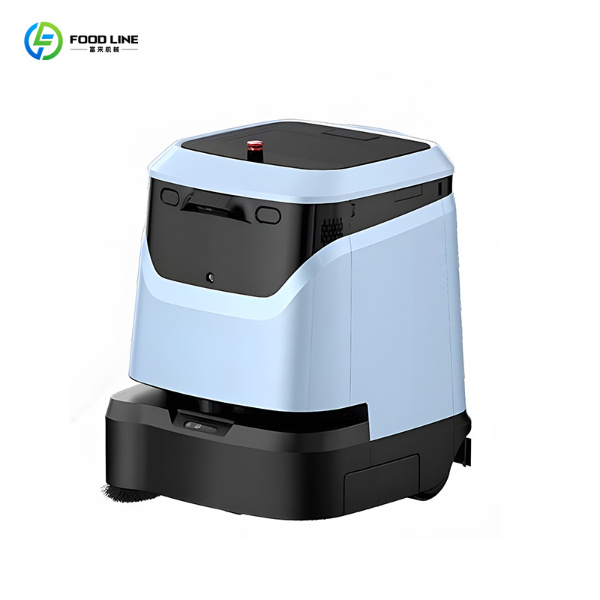
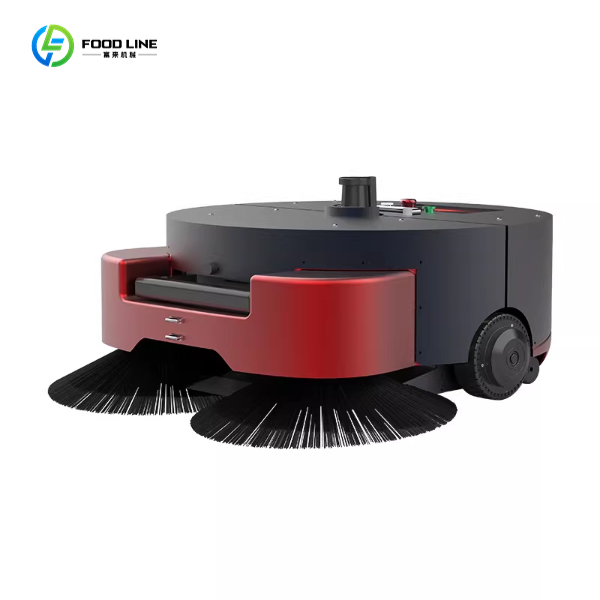
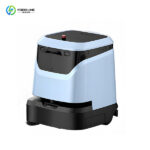
For example, someindustrial cleaning robot models combine LiDAR and visual perception. These systems can support route planning in large facilities and adapt to changing floor conditions. Some advanced systems can also resume cleaning after charging. Automatic docking can include charging, water refilling, and wastewater handling. For large warehouses, this creates a repeatable cleaning process with less operator involvement.
Get Videos & Shipment Details
Features to Check Before Buying A Warehouse Cleaning Robot
Feature
Why It Matters
Cleaning width
A wider path can improve coverage in open areas.
Battery runtime
Longer runtime supports full-shift cleaning.
Water tank capacity
Larger tanks reduce refilling interruptions.
Navigation system
LiDAR and cameras improve obstacle detection.
Floor compatibility
Check suitability for concrete, epoxy, tile, or terrazzo floors.
Docking station
Automatic charging and water management reduce manual work.
Safety functions
Emergency stops, anti-collision sensors, and safe-stop logic protect staff.
Reporting software
Cleaning reports help managers track coverage and performance.
The automatic cleaning robot price depends on several factors. These may include:
Cleaning width
Battery capacity
Navigation system
Scrubbing or sweeping functions
Water tank capacity
Automatic docking
Software and remote monitoring
After-sales service
Instead of comparing only the purchase price, buyers should calculate the total operating cost. Labor savings, cleaning frequency, maintenance, and machine downtime all affect ROI. If you are looking for an automatic cleaning robot for sale, request a quotation based on your floor area and cleaning requirements. A supplier can then recommend a suitable configuration.
An industrial warehouse cleaning robot is especially useful for:
Logistics centers
E-commerce warehouses
Manufacturing warehouses
Cold storage facilities
Large storage centers
Manufacturing and Packaging plants
These environments need stable cleaning to reduce dust, spills, and debris. The larger and more repetitive the floor layout, the stronger the case for cleaning automation.
If your facility needs stronger cleaning performance, Foodmax Machines offers a full range of industrial cleaning robotsdesigned for large warehouses and manufacturing plants. These robots deliver stable autonomous cleaning, high coverage, and low daily maintenance. They help reduce labor costs and keep your operations running smoothly. To learn more or request a custom solution, contact our team for a free quote.