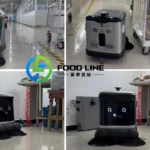
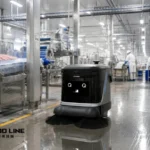
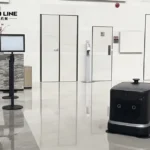
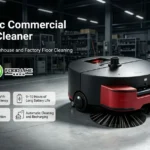
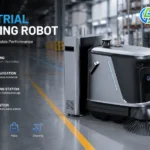
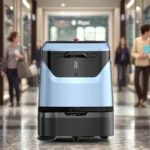
A food distribution center in Spain deployed two industrial robotic floor scrubber machines across an 8,000 m² facility. By dividing the warehouse into dedicated cleaning zones and scheduling work during low-traffic periods, the customer improved cleaning consistency and reduced routine manual cleaning work by approximately 60%.
Daily autonomous cleaning with scheduled off-peak cycles
Main Challenge
High labor cost and inconsistent floor hygiene in high-traffic zones
Solution
Zoned autonomous cleaning with two robots and optimized route planning
Get Videos & Shipment Details
Food Distribution Center Warehouse Cleaning Needs
The customer operates a regional food distribution center in Spain covering 8,000 m². The site includes warehouse storage, staging, packaging, and dispatch areas. Multiple shifts operate daily, with frequent forklift and pallet truck traffic. Floor cleanliness is critical to meet internal hygiene procedures and audit requirements. Dust, packaging debris, and occasional liquid spills accumulate quickly in high-traffic zones. Before automation, cleaning relied mainly on manual equipment. Coverage depended on operator availability, leading to uneven results and high labor costs.
Request a Solution for My Business
Warehouse Cleaning Challenges Before Robot Deployment
Large floor area requiring daily sweeping and scrubbing
Continuous forklift traffic that interrupted manual cleaning routes
Need for cleaning during off-peak hours without disrupting logistics operations
Repetitive manual work causing inconsistent quality and operator fatigue
Difficulty maintaining complete and traceable cleaning records
Two autonomous floor scrubbers were deployed with clear zone division:
One robot covers the main warehouse aisles and high-traffic areas
The second robot focuses on packaging, staging, and dispatch zones
Key capabilities used:
Autonomous route planning and obstacle avoidance
Scheduled cleaning tasks (including night and lunch-break windows)
Automatic charging and multi-zone map switching
Adjustable water flow, scrubbing pressure, and suction
Digital cleaning records for hygiene traceability
Routes were mapped to the existing warehouse layout so daily logistics operations remained unchanged. The robots were configured to operate safely around forklift traffic through restricted zones, timed schedules, and obstacle-detection settings.
They can be suitable for non-food-contact floors such as warehouse aisles, staging areas, packaging zones, and dispatch areas. The final configuration depends on floor type, hygiene procedures, traffic, and cleaning requirements.
Q3.How many cleaning robots does an 8,000 m² warehouse need?
The number depends on the cleanable area, cleaning frequency, floor conditions, traffic patterns, and available operating windows. This project used two robots with separate cleaning zones.
Q4.Can the autonomous industrial cleaning robots clean at night?
Yes, scheduled off-peak cleaning can be used when the facility layout, safety settings, lighting, and site procedures support unattended operation.
After the initial training and route optimization period, daily operation is largely autonomous. Operators mainly monitor status, handle exceptions, and perform basic maintenance.
Q6.What information is needed for a robot cleaning assessment?
Please provide the facility area, floor plan, floor type, obstacles, aisle widths, traffic patterns, cleaning frequency, and current cleaning process.
Request Brochure or Catalog
Request a Cleaning Automation Assessment
If you want to deploy the cleaning robot in your facilities, please send us:
Facility size and country
Floor type and site layout
Current cleaning method and frequency
Number of shifts and operating hours
Preferred contact method
Foodmax Machines will recommend a suitable robot configuration, route plan, and estimated cleaning capacity based on your facility’s conditions. Most assessments can be completed within a few business days after receiving the floor plan.