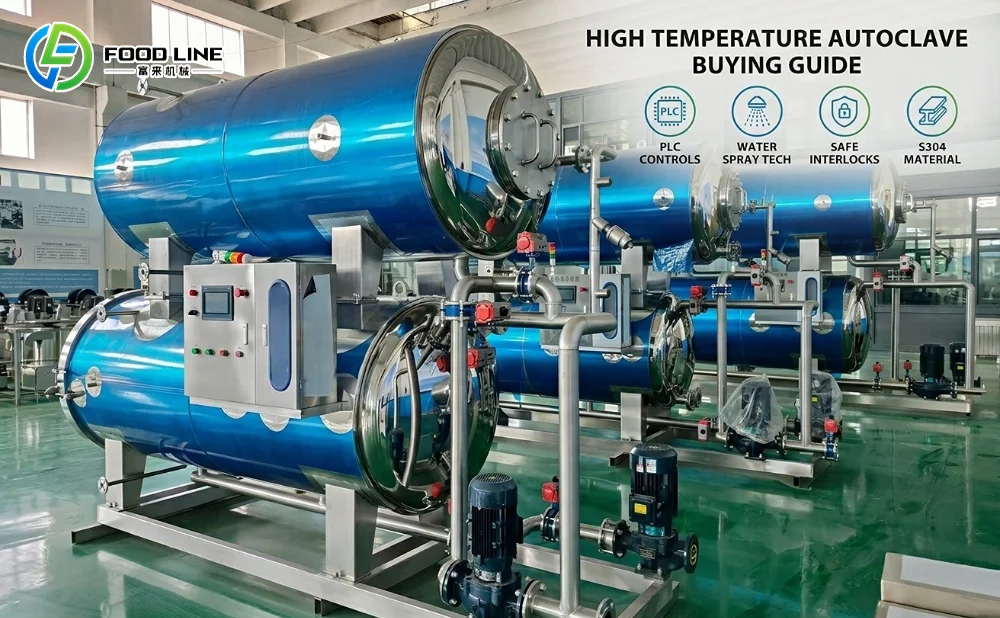
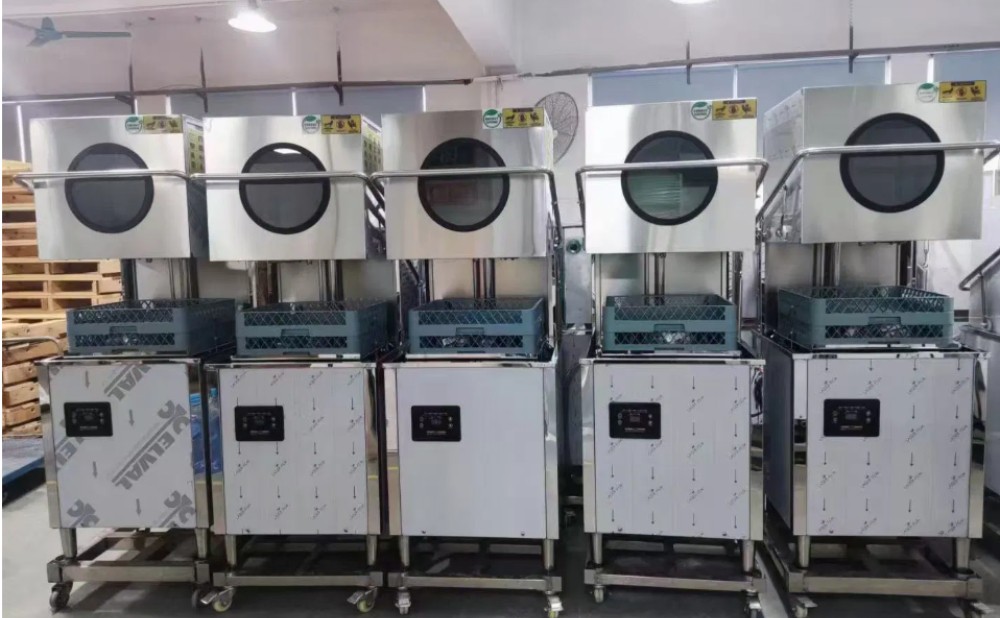
Choosing a high temperature autoclave comes down to three matches: retort type to package, heating method to utilities, and capacity to batch load. This guide uses two Foodmax Machines projects to show how to choose an industrial sterilizer machine for packaged food.
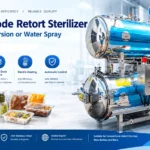
We have supplied both water-based types for pouch products. The Spain project used a water spray retort. The Philippines project used a water immersion retort. Both control pressure during the cycle. See our water immersion retort autoclave range for equipment details.
Request Brochure or Catalog
Match the High Temperature Autoclave to Your Food and Packaging
Use these rules as a starting point:
Flexible Pouches (broth, ready meals, seafood): choose water immersion or water spray with pressure control. Ask how the unit protects seals during cooling.
Metal Cans: any of the three types can work. Steam fits when a boiler already runs.
Glass Jars: choose a water-based retort with controlled pressure and gradual cooling.
Before requesting a quotation, confirm four details: package material, package dimensions, sealing method, and loading arrangement. They set the chamber size and tray layout.
Customer and Product: Food company in Spain, beef bone broth in stand-up Doypack pouches
Equipment: FL-SJ900×1800 water spray retort, 1000L nominal, electric heating
Estimated Schedule: About 15 working days of production plus 35 days of sea freight
The customer needed final sterilization after bone processing, cooking, fat separation, concentration, and filling. A pressure cooking kettle could not take that role because a kettle cooks and a retort sterilizes packaged product. Read the full Spain beef bone broth project.
Electric vs. Steam Heating for a Food Retort Autoclave
Steam Boiler Retort: It needs a boiler room and steam piping. Check boiler capacity and steam quality first. It suits plants with a working boiler.
Electric Water Immersion Retort: It needs no boiler room, because the unit heats its own water. You connect power, water, compressed air, and exhaust. Check electrical capacity first. It suits plants with no boiler or little space.
No boiler and limited space: choose electric. Working boiler with spare capacity: check steam first. Compare running cost with your own electricity and steam prices.
Customer and Product: Food processor in the Philippines, ready-to-eat pouch meals and seafood
Site Conditions: No steam boiler and limited floor space
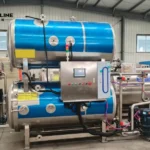
Equipment: FL-700×1200 water immersion retort, 0.57 m³, electric heating
Controls and Material: Siemens PLC, English touchscreen, SUS304 stainless steel
The customer’s earlier equipment cooked unevenly and sometimes burst pouches. The immersion cycle with counter-pressure cooling addressed both problems. The order was approved after a sample run. Read the full Philippines food retort project.
Q1.What is a high temperature autoclave used for in food processing?
It sterilizes packaged foods under controlled temperature and pressure. Typical products include meat, seafood, ready-to-eat meals, sauces, and broth.
Q2.How do I choose the right retort capacity?
Start from package size, tray layout, target kilograms per day, and full batch cycle. Your supplier can then size the vessel and trays.
Q3.Should I choose water immersion or water spray for pouches?
We have supplied both for pouch products. Either type needs pressure control during the cycle. Decide by package, load pattern, and a sample run.
Q4. Should I choose an electric retort or a steam heating retort?
Choose electric if you have no boiler or little space and enough electrical capacity. Choose steam if a boiler already has spare capacity.
Q5. How long does the delivery of the autoclave sterilizer take?
For our Spain project, the estimate was about 15 working days for production and 35 days for sea freight. These are estimates, not guarantees.
Q6.What is the difference between a pressure cooking kettle and a retort?
A pressure cooking kettle cooks or extracts under pressure. A retort sterilizes packaged products under controlled thermal conditions. They are not interchangeable.
Get Factory Quote | WhatsApp/Tel: +8613838509601
Get a Quotation for a Food Retort Autoclave
Send us your product, package type and dimensions, target output, heating source, and destination country. Foodmax Machines will propose a retort configuration for your project. Looking for an autoclave sterilizer for sale? Tell us your batch size, and we will recommend a configuration.