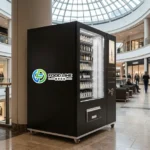
The gym protein vending machine is becoming a popular revenue opportunity for gym owners, distributors, and vending operators. But before investing, buyers need clear answers about how these machines work, how much they cost, how fast they can pay back, and whether they are really worth it. In this guide, we explain how the machines work, what they cost, how quickly they can pay back, and how to start a profitable protein vending business in 2026.
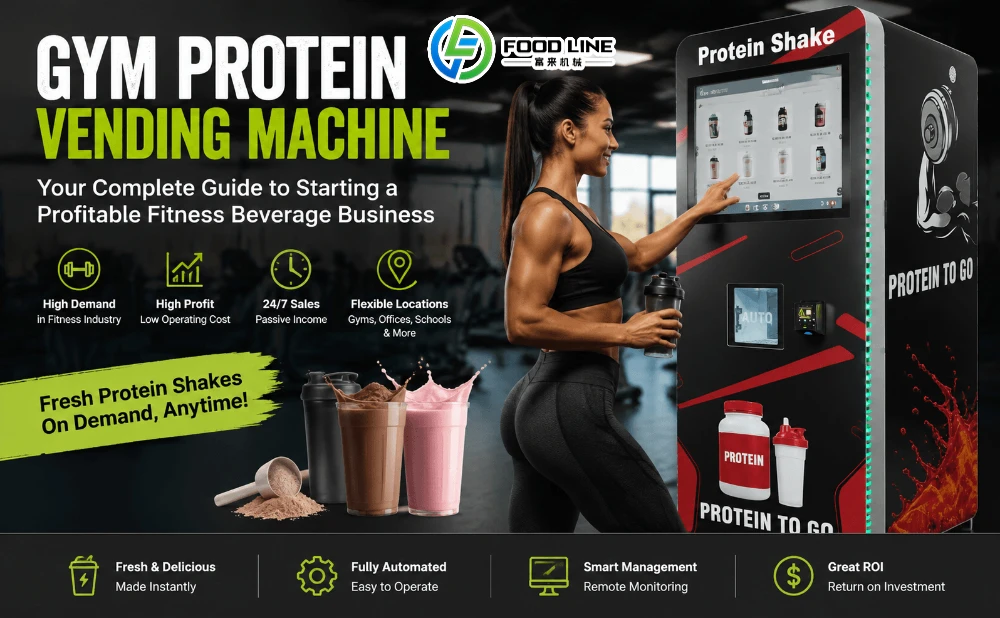
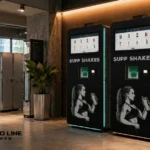
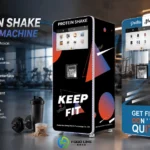
A gym protein vending machine is an automated retail unit that stores protein powder, mixes it with water or milk on demand, and dispenses a fresh shake in under 60 seconds. No staff is required. Unlike traditional snack vending machines that only drop pre-packaged drinks or bottles, a modern protein shake dispenser prepares each drink fresh at the point of purchase. The customer simply uses a touchscreen to choose a flavor and size, makes payment, and receives a freshly blended shake instantly. For B2B buyers, this machine offers a high-margin, low-labor business model that is especially attractive to gym owners, fitness managers, and vending operators.
Request a Solution for My Business
Traditional Drink Vending Machine vs. Protein Vending Machine
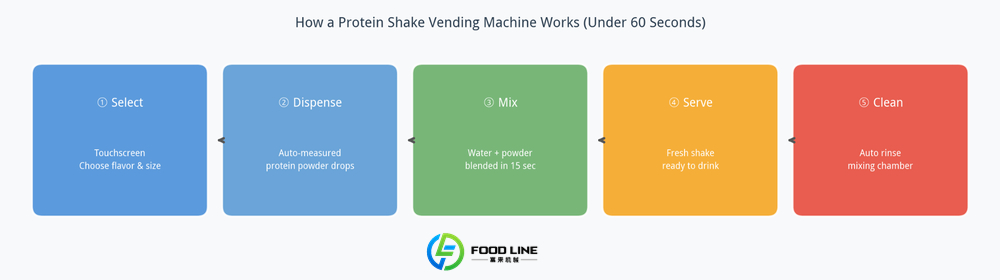
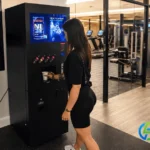
The process is simple for the customer and efficient for the operator. First, the user chooses a flavor, serving size, and sometimes a protein type on the touchscreen. Then the machine measures the powder, adds the liquid, and mixes the drink automatically. After that, it dispenses the shake into a cup or bottle.
How the protein powder vending machine works
Modern protein shake vending machines usually include:
Touchscreen controls.
Powder storage hoppers.
Water or liquid tanks.
Automatic mixing and dispensing.
Cashless payment options.
Cleaning and hygiene functions.
Remote monitoring for sales and inventory.
A well-designedprotein powder vending machine should be easy to use, fast to operate, and simple to maintain. That is important for gyms, because customers want convenience and owners want reliability.
Hygiene & Self-Cleaning System: Look for automatic rinse cycles. The machine should clean after every 10-15 drinks. It should have a hot-water sanitization mode. Without this, bacteria grow fast.
Multi-Hopper Capacity: Get at least 4 to 7 hoppers. This lets you stock different flavors and formulas. You can offer whey, vegan, and low-carb options. This appeals to more members.
Smart IoT Remote Management: Choose a machine with a cloud dashboard. You can monitor sales in real time, get low-stock alerts, and adjust pricing remotely. This is essential for operators with multiple gyms.
Payment Flexibility: Buyers expect cashless payments. Ensure the machine supports credit cards, NFC/tap-to-pay, and mobile wallets like Apple Pay and Google Pay.
Compact Footprint: Most commercial machines take up 0.5 to 0.8 square meters. This is about 5 to 8 square feet. It fits near the entrance or locker rooms easily.
Research Local Demand: Visit 5 to 10 gyms. Count how many people leave in one hour. Ask staff if members want protein shakes. Look for gyms with 500+ members and no nutrition retail.
Choose the Right Machine: Pick a machine with 4+ hoppers, self-cleaning, IoT monitoring, and cashless payment. The gym protein vending machine you choose affects your service costs for years.
Secure Locations: Approach gym owners with a win-win deal. Offer them 10-25% of gross revenue. Emphasize that you handle restocking and maintenance. They only provide space.
Source Protein Powder in Bulk: Buy direct from manufacturers. Aim for $0.80 to $1.20 per serving. Stock whey isolate (most popular) and plant-based (fast-growing).
Set your pricing: Start at $5.50 to $6.50 per shake. Monitor sales. Adjust if needed. Premium downtown clubs can charge $7-8.
Monitor and Optimize: Check your dashboard daily. Track popular flavors and peak times. Restock proactively to avoid losing sales.
Scale Up: Once one machine is profitable, replicate the model. Successful operators build portfolios of 10-50 machines. They manage everything from one central dashboard.
Request a Solution for My Business
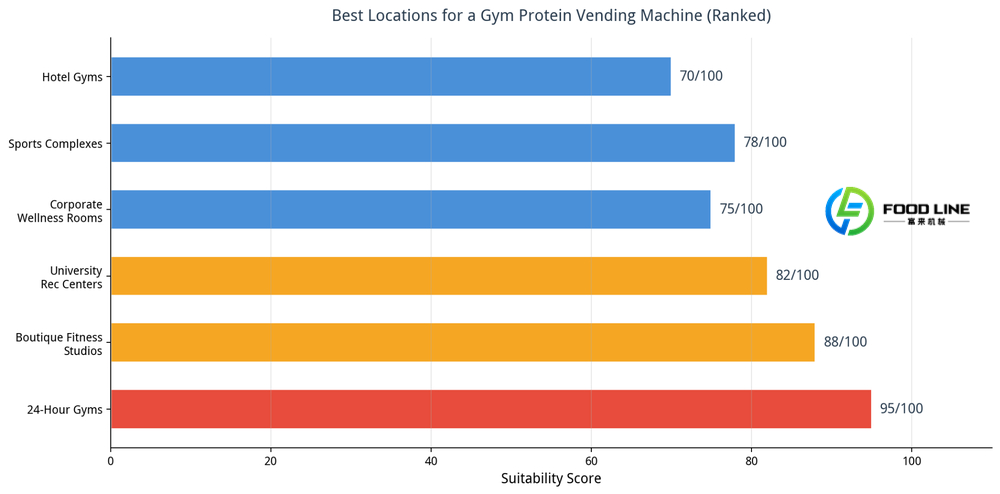
Top-Rated Locations for a Gym Protein Vending Machine
24-Hour Gyms (Score: 95/100, Top Choice)
All-day stable traffic; members have strong protein demand at all time slots, gym owners welcome this value-added amenity.
Boutique Fitness Studios (Score: 88/100)
Highly health-conscious clients, smaller member base but higher per-person purchase rate.
University Sports Recreation Centers (Score: 82/100)
Mass student athlete groups, low-price shakes sell well, long-term school cooperation contracts available.
Corporate Office Wellness Rooms (Score: 75/100)
Stable daytime staff flow, many companies cover machine costs as employee welfare benefits.
Professional Sports Complexes (Score: 78/100)
Athletes and parents regularly buy protein drinks during training and matches.
Hotel Fitness Centers (Score: 70/100)
Traveling fitness guests need instant protein shakes and support high premium pricing.
Best locations for protein shake vending machines
Request a Solution for My Business
Is a Protein Vending Machine Worth the Investment?
For Gym Owners:
Verdict: Yes. If you have 500+ members and no supplement retail, invest. A gym protein vending machine generates $1,500 to $3,500 monthly. It costs zero staff time. It improves member retention too.
For Vending Operators:
Verdict: Yes. The 60-80% margins are excellent. The ~3-month payback is among the best in vending. The main risks are location quality and powder spoilage. You can manage these easily.
For Distributors:
Verdict: Yes. Gym chains and corporate wellness programs are buying. Equipment sales (30-40% margin) plus recurring powder supply create a strong dual-revenue model.
Request a Solution for My Business
FAQs about Protein Vending Machine Business
Q1. How long does a protein vending machine take to make a shake?
It takes under 60 seconds from payment to finish. Most modern machines complete the cycle in 25 to 40 seconds.
Q2. Can I use any protein powder brand?
Yes. Quality machines have open hopper systems. They accept any brand or formula. You are not locked into proprietary pods.
Q3. What is the typical profit margin of the protein vending machine business?
Gross margins are 60% to 80%. Net margins (after venue commission and overhead) are usually 40% to 55%.
Q4. How often do I need to restock the protein machine?
High-traffic gyms need restocking every 2-3 days. Low-traffic locations can go a week. IoT alerts tell you when hoppers are low.
Q5. Can the protein power vending machine go outdoors?
No. Most machines are for indoor use. Temperature changes affect powder quality. Stick to gyms, offices, and indoor sports facilities.
Q6. How much does a protein shake vending machine cost?
The base unit costs $3,000 to $5,500. Total startup costs, including shipping and inventory, range from $5,000 to $8,100.
Q7: How long is the payback period for a gym protein vending machine?
Most operators achieve a full return on investment (ROI) within 6 to 12 months, depending on gym foot traffic and location. Here is a realistic monthly financial breakdown per machine: Daily Sales Volume: 25 – 40 cups/items per day Average Ticket Price: $4.00 – $5.50 per serving Gross Profit Margin: 60% – 70% (COGS is approx. $1.20 – $1.80 per cup) Net Monthly Profit: $800 – $1,800 (after deducting ingredient costs, gym revenue share, and machine insurance) Based on an average total startup cost of $6,500, generating ~$1,000 in net profit monthly allows you to reach the break-even point in under 7 months.
Request a Solution for My Business
Conclusion: A Smart, Scalable B2B Opportunity
A gym protein vending machine combines fitness trends, healthy nutrition demand, and automated retail. With the right location and business strategy, it can create a new revenue stream for gyms, operators, and entrepreneurs. Contact our team for a customized protein vending solution, machine demo, and investment consultation.