Understanding Modified Atmosphere Packaging (MAP) Machines

how to choose modified atmosphere food packaging machine

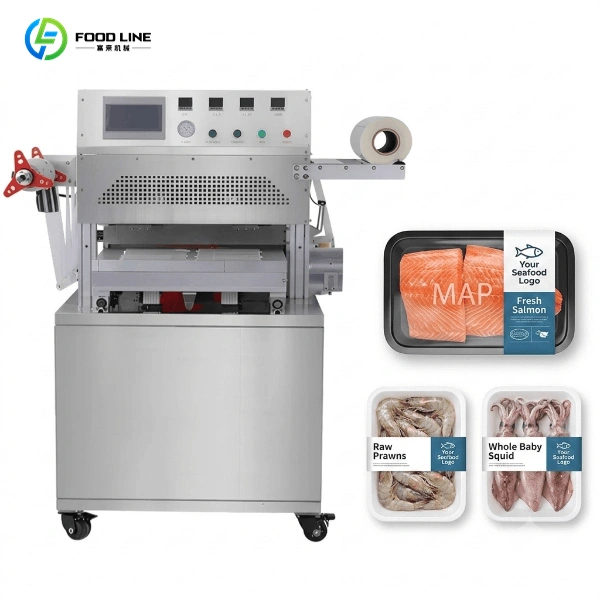
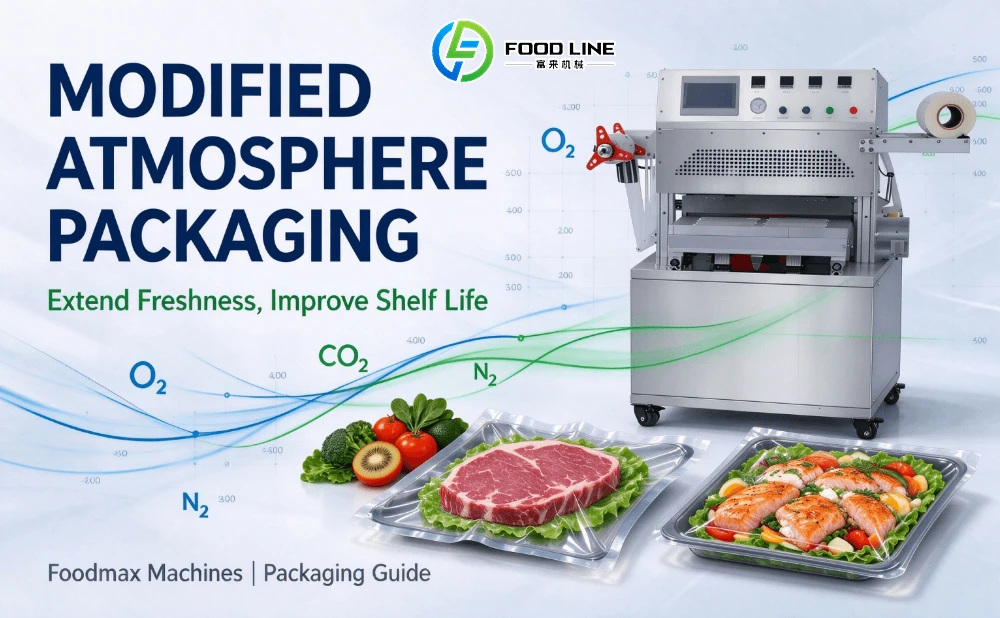
A modified atmosphere food packaging machine replaces the air in a food package with a protective gas mix, then seals the package. This keeps food fresh longer and makes it look better on the shelf. This guide explains how the machine works, which foods it can pack, how to fix common problems, and how to choose the right machine.

What Is a Modified Atmosphere Food Packaging Machine?

A modified atmosphere food packaging machine is also called a MAP machine. It removes air from a tray, adds a gas mix, and seals the film to the tray.

The MAP tray sealing machine does four jobs:

  • Removes most of the air
  • Adds food-safe gas
  • Seals the film to the tray
  • Gives the same result in every batch

MAP is not the same as vacuum packing. Vacuum packing removes air and adds nothing. A MAP pack keeps a gas mix around the food.

How Does a Modified Atmosphere Packaging (MAP) Machine Work?

A modified atmosphere packaging (MAP) machine integrates vacuuming, gas flushing, and heat sealing into a single automated cycle to extend shelf life.

  1. Tray Loading
    Place food into pre-formed trays and position them in the machine.
  2. Vacuuming
    The chamber closes, and a vacuum pump removes air and oxygen.
  3. Gas Flushing
    The machine fills the chamber with a custom gas blend, usually including Carbon Dioxide (CO₂), Nitrogen (N₂), and Oxygen (O₂).
  4. Heat Sealing
    A top film is applied, then heated and pressed to seal the tray tightly.
  5. Quality Check
    The chamber returns to normal pressure. The machine then checks the seal, gas levels, and appearance.

What Gases Are Used in MAP Food Packaging?

  • Nitrogen (N₂): Pushes out oxygen. It also fills the pack so it keeps its shape.
  • Carbon dioxide (CO₂): Slows germ growth. High levels may shrink packaging or affect food quality.
  • Oxygen (O₂): Fresh red meat needs it to stay bright red. Most other foods do better with very little oxygen.

There is no one gas mix for all foods. Test the mix on your own product before production.

What Foods Can a MAP Food Packaging Machine Package?

FoodGas mixShelf life: air → MAP
Fresh pork and beef70–80% O₂ + 20–30% CO₂2–4 days → 5–8 days
Raw poultry30% CO₂ + 70% N₂4–7 days → 10–21 days
Lean fish and shellfish30% O₂ + 40% CO₂ + 30% N₂2–3 days → 4–6 days
Fatty fish40% CO₂ + 60% N₂2–3 days → 4–6 days
Cooked meat30–40% CO₂ + 60–70% N₂1–3 weeks → 3–7 weeks
Cooked fish and poultry30–40% CO₂ + 60–70% N₂5–10 days → 7–21 days
Ready meals30–50% CO₂ + 50–70% N₂2–5 days → 5–10 days
Pasta and noodles50% CO₂ + 50% N₂1–2 weeks → 3–4 weeks
Hard cheese100% CO₂1–4 weeks → 2–12 weeks
Soft cheese30% CO₂ + 70% N₂1–4 weeks → 2–12 weeks
Salads and fresh-cut produce30–50% CO₂ + 50–70% N₂3–14 days → 7–21 days
Dry food (coffee, nuts, dried vegetables)100% N₂4–8 months → 1–2 years

Notes:

  • Fresh meat needs high oxygen to keep its bright red color.
  • Keep fresh meat, fish, and poultry at −1 °C to +2 °C. Keep cooked food at −1 °C to +3 °C.
  • MAP does not replace cold storage and clean production.

How to Fix Common MAP Packaging Problems

ProblemLikely causeWhat to do
Too much air left in the packVacuum time is too short, or the vacuum system has a faultCheck the pump, pipes, chamber seal, and vacuum time
Uneven gas fillGas supply is not stableCheck gas pressure and gas flow
Bubbles near the sealDirty tray rim, wrinkles in the film, or wrong seal settingsClean the rim. Adjust heat, pressure, and time
Weak or open sealsWrong seal settings, or film does not match the trayCheck the film. Adjust the seal settings
Packs swell in storageGerms, warm storage, or gas from the foodCheck food hygiene, storage temperature, and gas mix

MAP vs. Vacuum Packaging vs. Vacuum Skin Packaging

 MAPVacuum packagingVacuum skin packaging
How it worksRemoves air, adds gas mixRemoves airUses vacuum and heated film that wraps the food
Look of the packGas space above the foodFilm fits close to the foodFilm fits tight around the food
Pack typeTray with top filmBag or containerTray with skin film
Main goalControl the gas around the foodCut oxygen contactTight, premium look
Common foodsFresh meat, seafood, ready meals, cheeseMeat, fish, cheesePremium meat and fish fillets

Request Brochure or Catalog

How to Choose the Right Modified Atmosphere Food Packaging Machine

  1. What food will you pack? Each food needs its own gas mix and tray.
  2. What tray do you use? Check the length, width, and depth. Special sizes may need a custom mold.
  3. How many trays do you need per hour? Count trays per cycle, loading time, and unloading time.
  4. Does the film match the tray? The seal must stay tight and not leak.
  5. Do you plan to grow? Pick a machine you can upgrade later.

Need help choosing? Send us your food, tray size, and daily output. We will recommend a machine that fits.

Why Choose Foodmax Machines MAP Tray Sealing Machines?

Foodmax Machine makes MAP tray sealing machines for fresh meat, seafood, ready meals, tofu, cheese, and other foods. Depending on the model, our machines can include:

  • Vacuum and gas filling
  • Automatic tray positioning and film sealing
  • Custom tray molds
  • Adjustable settings
  • Multi-tray packing
  • Links to other lines on your site

FAQs about Modified Atmosphere Food Packaging Machines

Q1. What is the difference between a MAP machine and a vacuum packaging machine?

A MAP machine removes air and adds a gas mix before it seals. A vacuum machine removes air and seals. It adds no gas. MAP usually packs trays. Vacuum machines usually pack bags.

Q2. Why does my MAP pack have air bubbles?

The cause can be weak air removal, uneven gas fill, a poor seal, or gas from the food. Some gas space in a MAP tray is normal. Check the oxygen level and the seal before you blame the vacuum system.

Q3. Can one MAP tray sealer machine pack different foods?

Yes, if the tray, mold, film, and gas mix all match. Some foods need a new mold or new settings.

Q4. How much does a MAP packaging machine cost?

The price depends on the type, the number of trays, the vacuum pump, and the mold. Send us your food type, tray size, and daily output. We will give you a quote.

Need a MAP Packaging Solution for Your Food Products?

Whether you are upgrading an existing tray sealer or planning a new food packaging line, Foodmax Machine can help you evaluate the right machine configuration. Send us your food product details, tray dimensions, and daily production requirements to discuss a suitable modified atmosphere food packaging machine.

Scroll to Top