Restaurant Robot Waiter: Transform Your Restaurant Service Efficiency
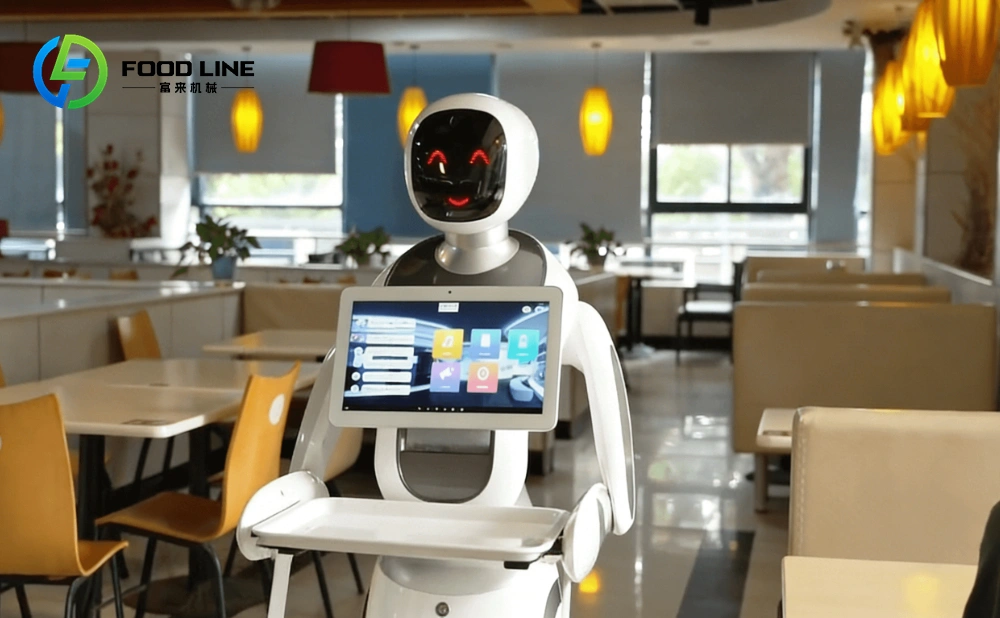
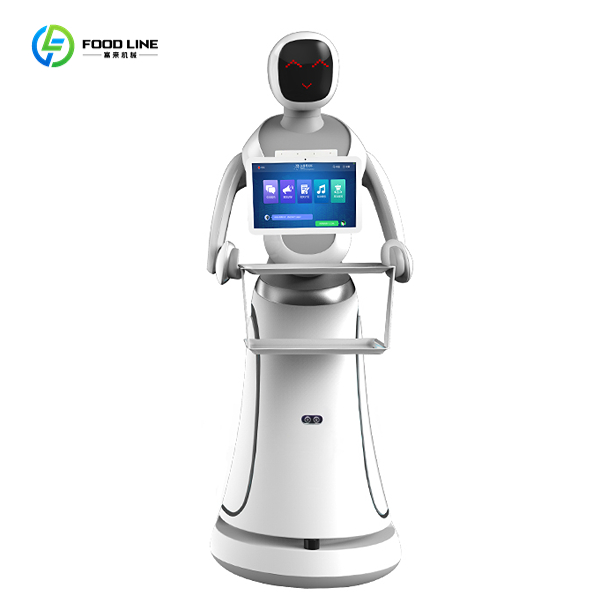
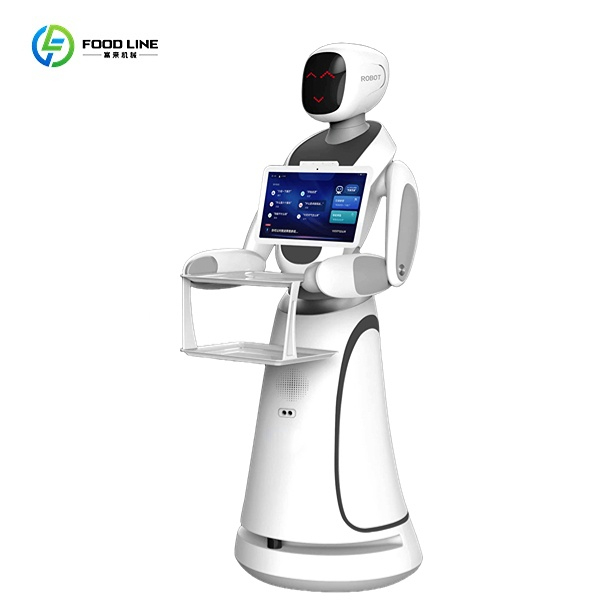
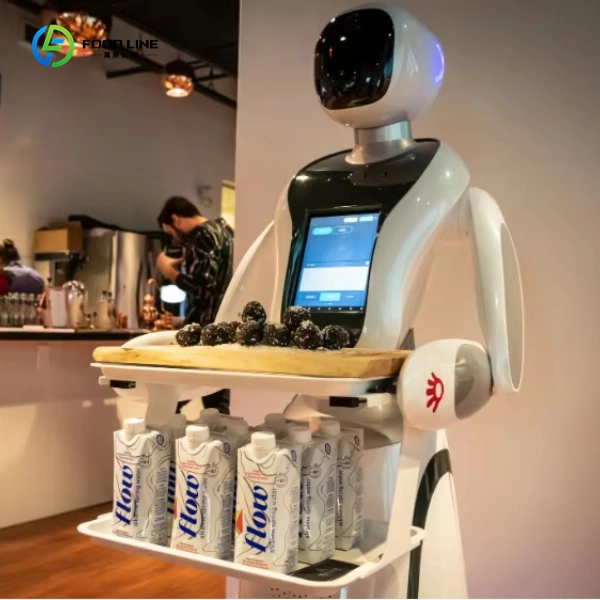
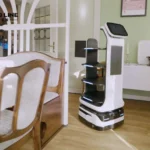
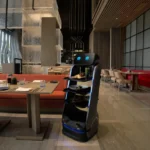
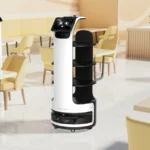
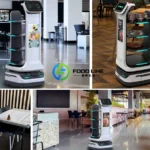
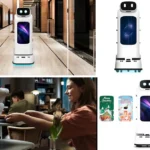
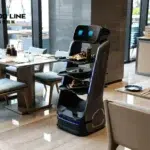
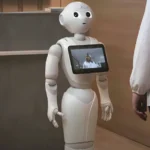
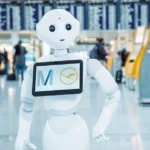
The restaurant robot waiter features a humanoid design that welcomes guests and delivers food autonomously. With AI voice interaction and robust navigation, it offers a smart alternative to traditional waitstaff. Furthermore, the robot supports multiple languages and can handle tasks such as promoting dishes and answering queries.
Request a Solution for My Business
Parameter Details of Restaurant Robot Waiter
Feature
Specification
Model
FL-Amy Restaurant Robot Waiter
Material
Eco-friendly ABS
Weight
45 KG
Load Capacity
5 KG
Display
13-inch Touchscreen
Speed
0–1.5 m/s
Positioning Accuracy
±50 mm
Battery
15 Ah
Charging Time
2–3 hours
Working Time
≥8 hours
Navigation
Lidar SLAM
Control System
Android
Request Brochure or Catalog
How Does A Restaurant Food Delivery Robot Work?
The restaurant robot waiter operates through a seamless process that starts with order reception and ends with safe delivery. Firstly, it uses 40-meter LiDAR navigation to map the environment and plan optimal paths. This technology allows the robot to move accurately between tables without human intervention. Additionally, the built-in AI voice system engages with customers; for example, it can greet guests and explain menu items using natural language processing. When delivering food, the robot employs a multi-sensor approach, including ultrasonic sensors and cameras, to avoid obstacles like chairs and people. Moreover, it features autonomous charging, so it returns to the dock when power is low, ensuring uninterrupted service. This efficient workflow reduces wait times and minimizes errors, making it ideal for high-volume settings.
Get Videos & Shipment Details
Key Features of Food Delivery Robot for Sale
AI Voice Interaction
Equipped with a self-developed vertical AI model, the humanoid robot understands natural language and conducts human-like conversations. It can answer questions about menus, the weather, or the news, enhancing customer engagement. The HD microphone array ensures clear speech recognition, even in noisy environments.
Double-Layer Tray
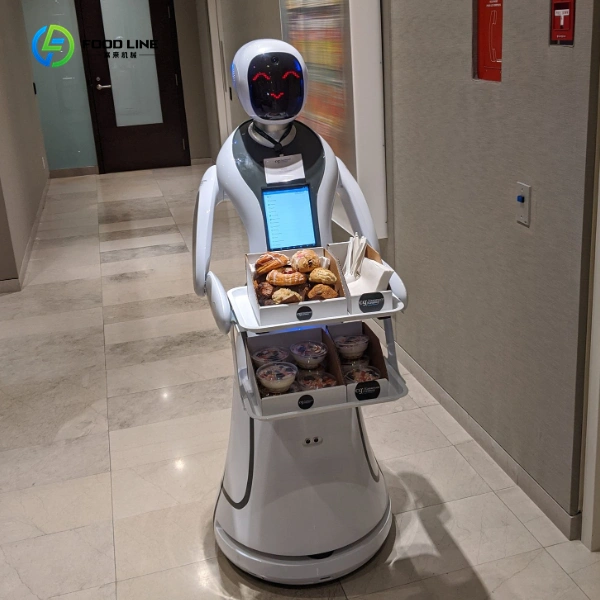
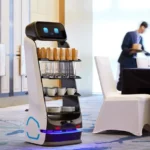
With a capacity of up to 5 kg, the tray is designed to hold multiple dishes securely. Its dimensions suit standard restaurant plates, and the shock-absorption system prevents spills during movement, ensuring food arrives intact.
Dish Promotion:
The restaurant delivery robot proactively recommends specialties, daily discounts, and meal combinations through voice prompts. This feature assists customers in making informed choices and boosts sales for the restaurant.
Intelligent Obstacle Avoidance
By combining LiDAR and depth cameras, the self-driving delivery robot detects objects like table legs and pedestrians in real-time. It then recalculates routes to avoid collisions, ensuring safe and efficient deliveries.
Welcome and Reception
Using facial recognition, the smart service robot identifies visitors and plays customized welcome messages. This personalized approach creates a friendly atmosphere and can attract more patrons.
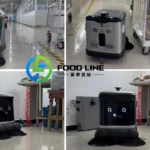
robot waiter delivering
robot in the restaurant
Get Videos & Shipment Details
Advantages of Restaurant Humanoid Waiters
Enhanced Efficiency
The restaurant delivery robot can work continuously for over 8 hours, delivering orders faster than human staff. It reduces average service time by 30-50%, allowing restaurants to handle more customers without additional labor. This leads to higher turnover and increased revenue.
Cost Savings
By automating repetitive tasks, the robot waiter minimizes the need for multiple waiters, cutting labor costs. Additionally, its durable design and low maintenance requirements result in long-term savings. The robot’s autonomous charging also eliminates downtime.
Improved Customer Experience
With smile service and personalized interactions, the smart service robot creates a memorable dining atmosphere. Customers enjoy novelty and convenience, which can lead to positive reviews and repeat business.
Safety and Hygiene
The robot follows standardized processes, reducing human contact in food handling. This is especially beneficial in post-pandemic scenarios, as it lowers contamination risks and promotes hygiene.
Get Factory Quote | WhatsApp/Tel: +8613838509601
FAQs of Robots for Delivery:
Q1. What is the price range for the food delivery robot for sale?
The cost varies based on configuration and volume, but the service robot offers competitive pricing. Contact their sales team for a quote tailored to your needs.
Q2. How does the robot handle stairs or uneven surfaces?
The robot waiter is designed for flat indoor environments. It uses LiDAR for navigation, but is not suitable for stairs; however, it can integrate with IoT elevator systems for multi-level buildings.
Q3. Is training required to operate the robot?
Minimal training is needed. The user-friendly interface allows staff to set routes and menus quickly. The robot provides on-site installation and training support.
Q4. Can the robot be customized for specific restaurant themes?
Yes, through the SDK and API interfaces, restaurants can add custom features like logos or welcome messages. This flexibility ensures the robot fits unique branding requirements.
Get Factory Quote | WhatsApp/Tel: +8613838509601
Intelligent Robot Manufacturer: Foodmax Machine
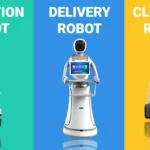
Foodline Machines, also known as Foodline Machinery, is a professional robot manufacturing company that integrates the public and trade sectors and has a development history of more than 20 years, specializing in the production of intelligent robots. Our reliable robot food delivery systems are successfully deployed and trusted by businesses across the United States, Australia, France, the United Kingdom, Italy, Spain, and many other countries. If you’re looking for a profitable and low-maintenance commercial solution, our service robots for sale are the perfect choice, including food delivery robots, human-like reception robots,automatic cleaning robots, and more intelligent robots. Fill out the inquiry form today, and our team will send you a customized quote and video demo within 24 hours.