Butter Processing Plant Guide | How to Make Butter

butter processing plant guide

If you’re planning to set up a butter manufacturing facility or simply want to understand how industrial butter is made, this guide covers everything about the butter processing plant: the complete production process, essential equipment, market data, and real-world investment insights.

Why Invest in a Butter Processing Plant?

  • The global butter market is projected to grow from $43.8 billion (2025) to $63.5 billion (2034), at a 4.34% CAGR.
  • The butter processing equipment market is set to grow from $2.1 billion (2024) to $3.5 billion (2033), at a 5.8% CAGR.
  • Asia Pacific holds the largest share (38.9% in 2025).

Three key growth drivers:

  1. Rising global butter consumption (bakery, confectionery, ready-to-eat meals).
  2. Automation & Industry 4.0 (IoT monitoring, predictive maintenance, food safety).
  3. Growing demand for premium, organic, and artisanal butter.

In a word, expanding market, firm prices, and advancing technology make now an ideal time to invest.

The Butter Manufacturing Process: Step by Step

1. Raw Milk Reception & Storage

  • Receive, filter, and cool raw milk to 2–4°C
  • Use insulated stainless steel silos to preserve freshness

2. Separation: Milk → Skim Milk + Cream

  • High-speed centrifugal separator
  • Target cream fat: 35%–42% (optimal for churning)
  • Efficient lines recover up to 94% thermal energy during pre‑heating

3. Cream Pasteurization & Vacuum Deaeration

  • Pasteurize at 90–95°C for 15–30 sec to inactivate enzymes and bacteria
  • Vacuum deaeration removes off‑flavors (onion, feed, etc.)
  • Critical for a clean, neutral butter base

 4. Cream Maturation (Optional for Cultured Butter)

  • For cultured/lactic butter: add starter culture
  • Mature 8–18 hours at 5–8°C for a rich, aromatic flavor
  • Improves spreadability and crystallization structure

5. Churning: Cream → Butter Grains

  • Convert oil‑in‑water emulsion to water‑in‑oil butter
  • Continuous churns produce 800–12,000 kg/h, depending on the model
  • Buttermilk residual fat as low as 0.5% for high yield

6. Washing, Salting & Kneading

  • Wash grains to remove buttermilk
  • Salt dosing: 0.8%–1.5% for salted butter
  • Kneading removes air and moisture; controls texture
  • Moisture accuracy ≤ ±0.1% in premium lines

7. Cooling & Texturizing

  • Cool to 8–12°C to stabilize the crystal structure
  • Ensures firmness, cutting performance, and baking behavior

8. Forming, Cutting & Packaging

  • Form blocks: 250g, 500g, 1kg, 5kg, 25kg
  • Automatic weighing accuracy: ±10g at high speed
  • Vacuum packing extends shelf life and prevents oxidation

Core Equipment in a Butter Production Line

StageKey EquipmentPurpose & Performance
Pre-TreatmentMilk Receiver, Separator, PasteurizerCream purification; energy recovery up to 94%
FermentationMaturation Tank12–18h culture for cultured butter lines
ChurningContinuous Butter Maker800–12,000 kg/h; CIP cleanable
WorkingKneader, Vacuum TexturizerRemove air; moisture control <0.1%
FormingButter Extruder, CutterConsistent block shape and weight
PackagingAutomatic Wrapper / Bulk PackerUp to 10,500 kg/h for bulk formats

Request Brochure or Catalog

Key Butter Standards You Must Meet

Butter quality is defined by strict global regulations:

  • China GB standard: Minimum 80% milk fat
  • EU standard: Minimum 82% milk fat
  • Industrial target: 80%–82.5% fat, 16% max moisture, low residual buttermilk to ensure shelf life ≥ 6–12 months

These values determine process parameters, equipment selection, and final product certification.

Quality Control in Butter Production Line

  • Fat content: Inline sensors maintain ±0.1% precision
  • Moisture: ≤ 16% to prevent spoilage
  • Microbiology: Pasteurization + CIP cleaning ensure food safety
  • Texture & melting point: Controlled cooling for consistent performance
  • Shelf life: Vacuum packing + low air content → 6–12 months

How to Choose the Right Butter Processing Plant

  • Define capacity: kg/h or tons/day
  • Choose product type: sweet cream, cultured, salted/unsalted
  • Select layout: compact, modular, or full industrial line
  • Prioritize: yield, automation, energy efficiency, or cleanability
  • Match standards: GB, EU, or local dairy regulations

Foodline: Milk to Butter Manufacturing Plant Solution

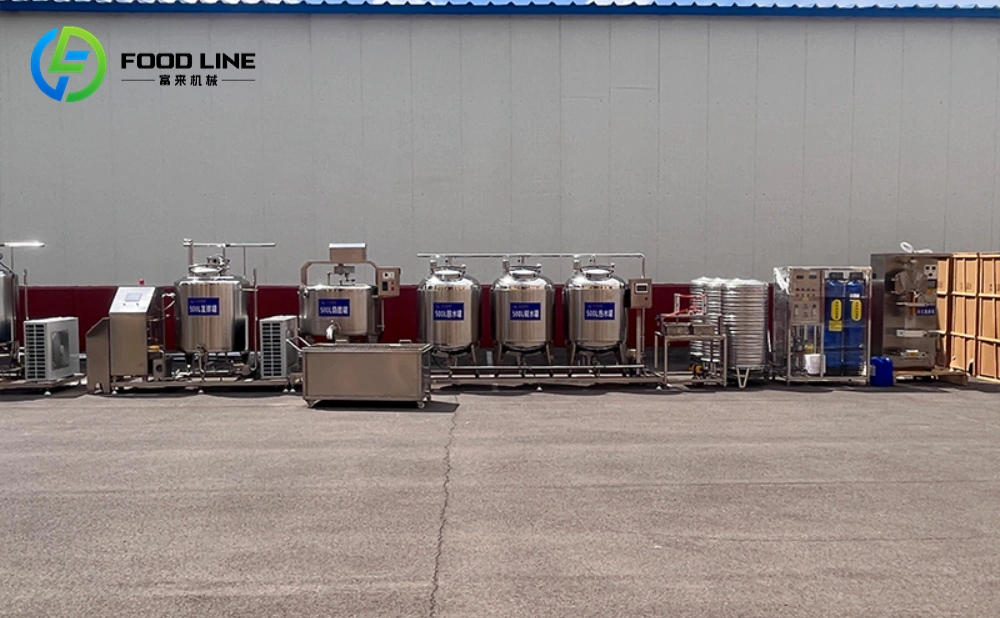
For small dairy farms and startup factories, we recommend this 500L/day milk to butter production line. It efficiently turns fresh raw milk into high-quality butter.

ParameterDetails
Raw MaterialFresh milk
Daily Processing Capacity500 Liters
End ProductButter
Voltage Support380V / 50Hz (custom voltage available)
ControlPLC with optional remote monitoring
MaterialFood-Grade SUS304 Stainless Steel
CertificationCE Certified
Main EquipmentMilk Cooling Tank, Centrifugal Pump, Pasteurization Tank, Cream Separator, Cream Storage Buckets, Butter Churn Machine
small-scale milk to butter processing plant

We also offer large butter manufacturing plants for larger dairy factories. Welcome to request a custom production solution for your business!

Conclusion

A well-designed butter processing plant delivers consistent quality, high yield, and compliance with global standards. From separation to packaging, every stage affects fat content, texture, flavor, and shelf life. Whether you’re building a small artisanal unit or a large industrial plant, matching equipment, process parameters, and quality control will maximize profitability and product reputation.

Scroll to Top